dear reader,
What follows isn’t a website, exactly. It’s a letter—about how I work, what I believe, and what it might be like to sit across from each other. Read it slowly. There is no menu. Only a scroll, and the pace of your own attention.
I provide individual therapy, couples therapy, and premarital counseling for clients in Colorado and Pennsylvania. My work focuses on relationships, conflict, intimacy, and the patterns that shape how we connect with ourselves and each other.
If you’re ready to meet, you can book a free consult here.
You found your way here. That means something.

who is writing
I am a licensed professional counselor providing therapy in Colorado and Pennsylvania. I hold a PhD in Counselor Education, and my doctoral training informs both my clinical work and my approach to teaching and supervision.
Alongside my private practice, I serve as affiliate faculty at Regis University in Denver, where I teach and support emerging counselors as they develop the clinical skills, presence, and insight required for this work. I also train and supervise emerging therapists and am a certified yoga teacher.

Dr.
Kelsey
George
PhD, LPC, CYT
how I understand this work

"Reality denied comes back to haunt." - Philip K. Dick
We are often shaped by forces we don’t fully see—habits of thought, unconscious patterns, and early ways of relating that subtly organize our lives. This work is an exploration of what it means to be human, including how we relate to our thoughts, our desires, and these often unseen patterns. The aim is not resolution, but lucidity. The practice of therapy is grounded in the view that psychological suffering is sustained less by the presence of difficult experience than by our entanglement with it.
I value the transformative potential of honesty and sustained self-examination, while remaining attentive to its limits. I acknowledge that excessive inward focus can become counterproductive; reflection is most useful when it facilitates movement and action. I am guided by a commitment to balance—between acceptance and change, insight and action, and depth and practicality.
what I believe
1. Psychological flexibility —> The capacity to respond rather than react, even in the presence of discomfort.
2. Courage to confront the self —> A willingness to encounter uncomfortable truths without retreat.
3. Language as shaping experience —> Attending to how words and narratives organize perception and possibility.
4. Acceptance of inner experience —> Thoughts and emotions are engaged with, not avoided or suppressed.
5. Curiosity about the unconscious —> A respect for the unseen forces shaping behavior, without reducing people to them.
6. Freedom through insight —> Understanding as a pathway to expanded choice, not just explanation.
7. Non-attachment to identity —> A willingness to loosen rigid self-concepts and inherited narratives.
8. Tolerance for ambiguity —> Comfort with opposite truths, contradiction, and not-knowing.
9. Collaborative inquiry —> Therapy as a shared investigation, not a one-sided intervention.
10. Meaning through action —> A life shaped by what one does, not only what one understands.
11. Engagement with reality as it is —> Letting go of how things “should” be in favor of direct contact with what is.
12. Exploration of desire —> Taking seriously what one wants, including its contradictions and tensions.
13. Recognition of repetition —> Noticing how unresolved patterns reappear across relationships and contexts.
14. Integration over fragmentation —> Bringing together disparate parts of the self into a more coherent whole.
15. Relational awareness —> Seeing how meaning and identity are shaped within relationships, including the therapeutic one.
Here are fifteen principles that shape my work. They are not rules. They are derived from theoretical orientations—the guiding framework that therapists use to help conceptualize the human experience.

what I’ve studied
I tend to understand most psychological pain as, in some way, relational. Conflict—whether between people or within the self—often points toward what is asking to be seen more closely. I believe that the quality of our relationships determine the quality of our lives, which is why I have devoted my clinical work to relational intimacy. Alongside this, spirituality and mindfulness serve as a kind of cornerstone in my work—offering a way of returning to presence, deepening connection, and seeing both ourselves and our lives with greater clarity and compassion.

relationship & intimacy (individual and couples therapy)

conflict resolution

modern manhood
how we’d work together
My pricing reflects my education, years of experience, caseload capacity, and clinical expertise. I intentionally maintain a limited caseload to ensure I can show up fully, with presence, attentiveness, and energy in each session.

-
Individual Psychotherapy
Our most important relationship is the one with ourselves. While your feelings might be valid, they also might be causing you distress. Psychotherapy is the journey to the depths of self.
$205/fifty minutes
-
Couples Therapy
Our (second) most important relationship in our modern world is with our partner. Couples therapy provides a space to hear your partner differently, perhaps for the first time. It is almost never too early to start couples therapy—the biggest mistake my couples make is starting therapy too late.
$205/fifty minutes
-
Presentations & Workshops
Emotional intelligence is the cornerstone of effective leadership and teamwork. Discover the art of navigating conflicts with clarity and composure, develop a better sense of self-awareness at work, and explore how to foster greater group cohesion.
$2500—travel not included
where I am
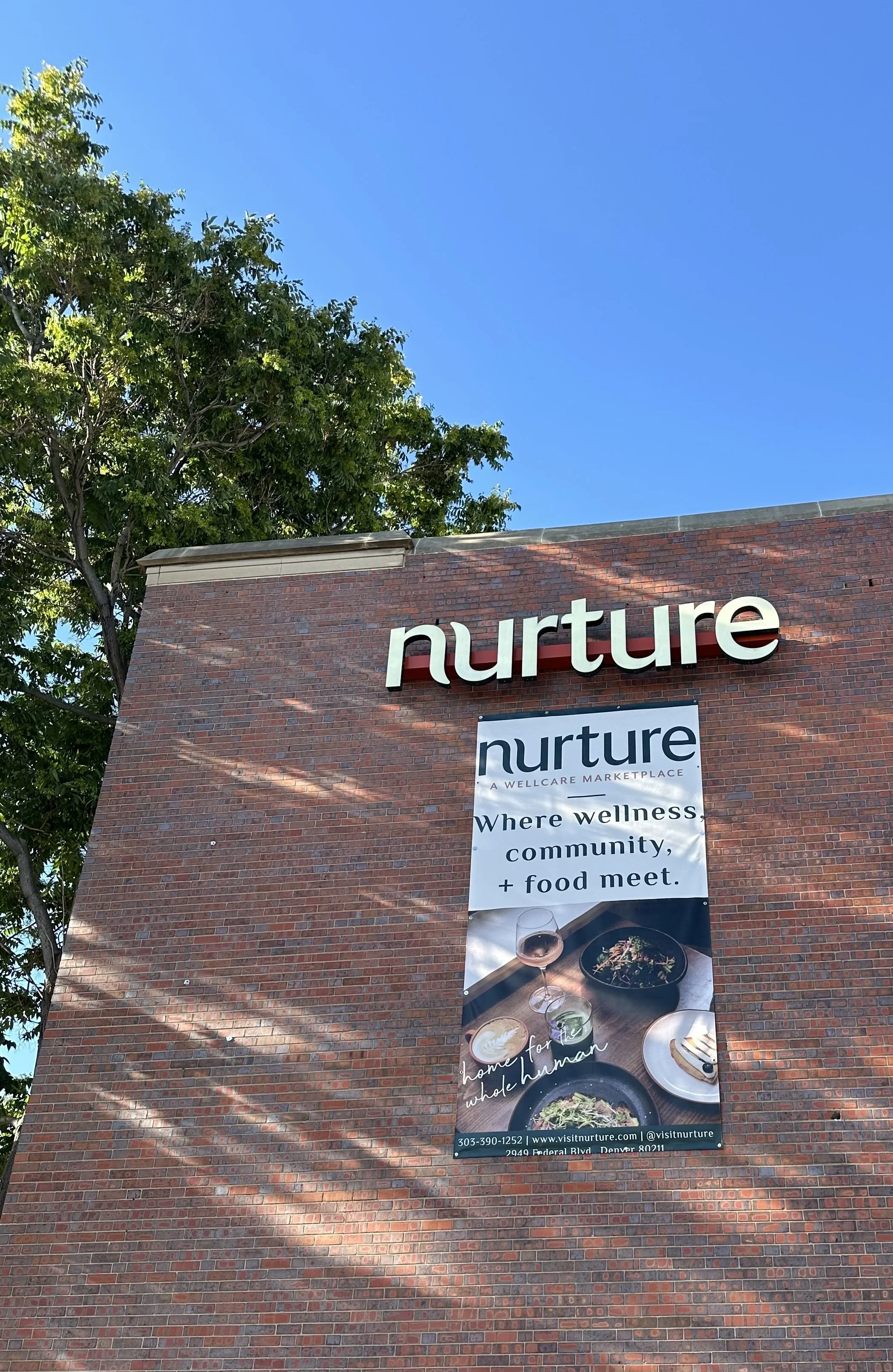
In Colorado, I see clients virtually & in-person at Nurture: A Wellcare Marketplace located in the Denver Highlands neighborhood at 2949 Federal Blvd.
In Pennsylvania, I see clients virtually.


If any of this resonates, you can book a free consultation with me here to see if we would be a good fit. You can also write to me directly at my contact information below.
signed,